
Should you replace a broken garage door spring yourself? No. A garage door spring is wound under very high tension, and one slip can cause a serious injury or damage your car and garage. The part is cheap to buy and easy to find, which is exactly why so many people are tempted. The risk is not worth the saving.
This article explains what a spring does, what goes wrong when homeowners try the repair, and what to do instead. It does not include repair steps, and that is on purpose.
Why is a garage door spring so dangerous?
The spring is the part that lifts your door. A double garage door can weigh 70 kg (150 lb) or more, and the springs carry nearly all of that weight. The opener only guides the door up and down. Without a working spring, the door feels like a heavy slab.
To do that job, a torsion spring is wound tight, like a very strong clock spring stretched along a steel bar. All of that stored energy wants to release. If a tool slips, a bolt gives way or a coil fails, the energy comes out in a fraction of a second. Winding bars can whip around. Parts can be thrown across the garage.
An extension spring is a different design but carries the same kind of energy. When one snaps, it can lash out along the side of the door. Older Toronto garages, especially detached garages off a laneway, often still have this type.
What actually goes wrong when homeowners try it?
Most injuries and costly mistakes come from the same few problems.
- Tools that are not made for the job. Screwdrivers and wrenches do not fit the winding cones properly and can slip out.
- The wrong spring. The right size depends on door weight, door height and drum size. A spring that is close is not good enough. The door may slam shut or refuse to stay open.
- Worn parts left behind. A frayed cable or a cracked drum can fail the moment the new spring is under load.
- Poor balance. A door that is not balanced puts strain on the opener and the hinges, and it can fall without warning.
Even people who are handy around the house can be caught out, because the danger comes from a part that looks harmless until it moves.
Why do springs break so often in a Toronto winter?
Springs wear out with use. A standard spring is often rated for around 10,000 cycles, and one cycle is one trip up and one trip down. A household that uses the garage several times a day can reach that number in a handful of years. High-cycle springs are built to last longer.
Winter adds extra stress. Long cold spells and repeated freeze-thaw swings make metal parts stiffen and old lubricant thicken. Road salt carried in on tires and splashed onto the door speeds up rust on coils and fittings. Many people notice a broken spring on the first hard cold morning of the season, when the door has to work against the cold.
Regular care helps. A light visual check, quiet operation and a door that moves evenly are all good signs. A noisy, jerky or heavy door is a reason to book an inspection, not a reason to wait for the bang.
Does the same warning apply to every type of spring?
Yes. Torsion springs and extension springs both store a lot of energy, and both can injure. Some extension systems have safety cables that run through the spring to contain it if it breaks. That is a useful safeguard, but it does not make the repair a do-it-yourself job.
The same goes for cables, drums and the bottom brackets that hold the cable at the base of the door. These parts are connected to the same stored energy. If a cable has snapped or the door is crooked in its track, treat that as serious too, and read about off-track and snapped cable repair before touching anything.
What should I do when I hear the bang?
A loud bang from the garage, often followed by a door that will not lift, is the classic sign of a broken spring. Here is what to do.
- Stop using the door. Do not press the opener button again and again.
- Do not try to lift the door by hand. It may be far heavier than you expect and could drop.
- Keep children and pets away from the garage door and from any car parked under it.
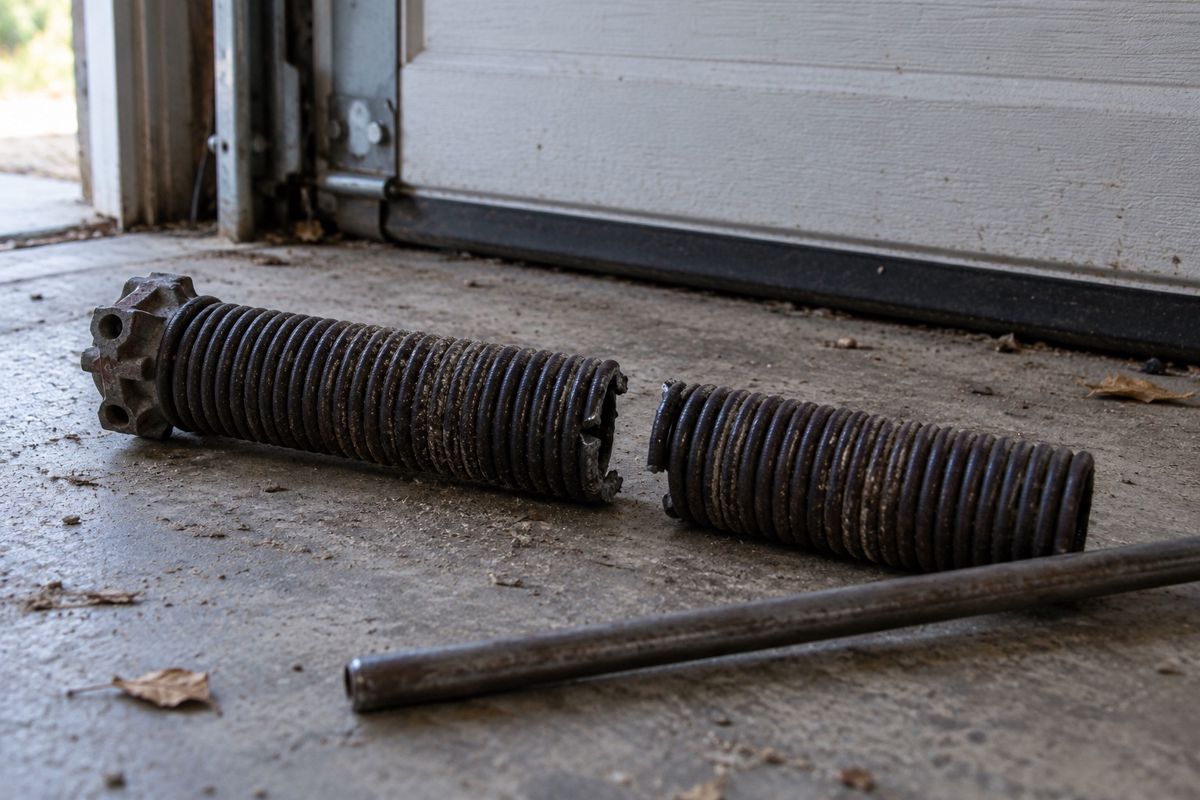
- Look from a safe distance for a gap in the coil above the door. A visible gap confirms the diagnosis, but you do not need to confirm it to call someone.
- Book a trained technician and describe what you heard and saw.
If your car is stuck inside, ask the technician about the safest way to open the door before you pull any release cord.
What does a trained technician do differently?
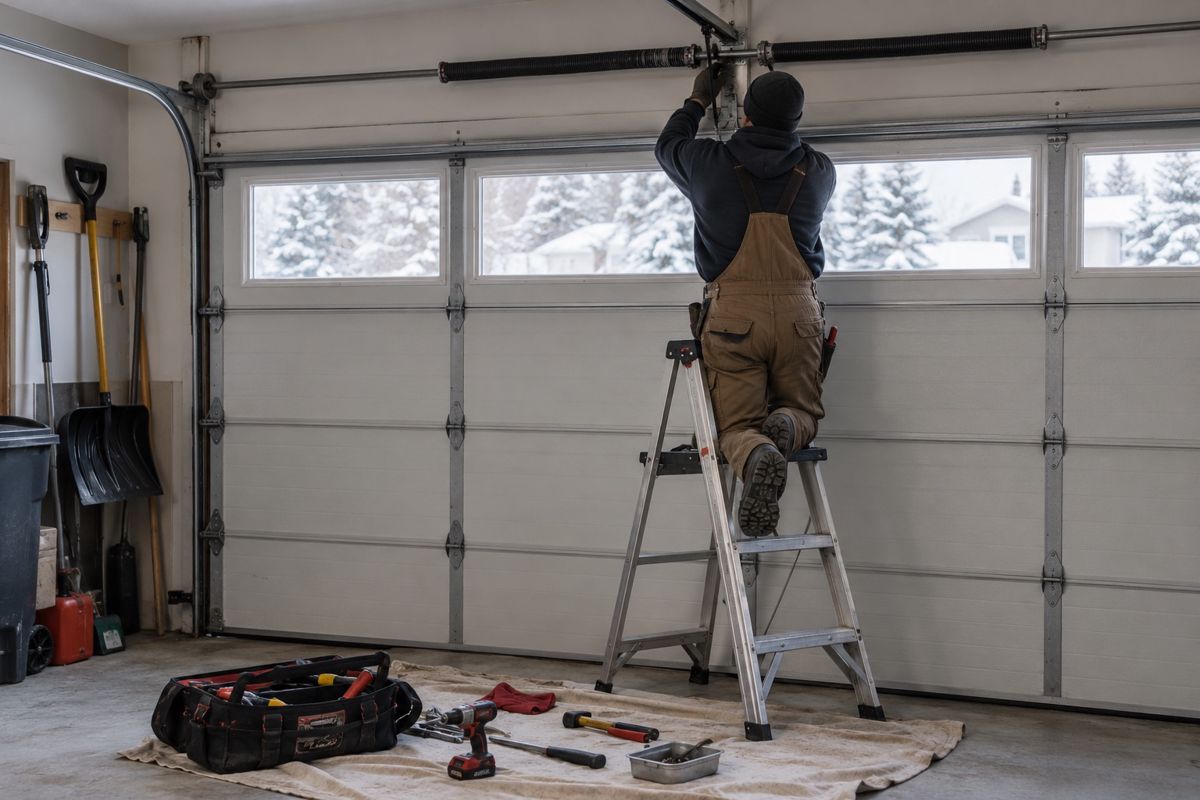
A technician starts by checking the door, not just the spring. The door is weighed or measured, the cables, drums, rollers and hinges are looked at, and the correct spring is chosen to match. Proper winding bars and a controlled process keep the tension under control the whole time.
After the new spring is fitted, the door is tested for balance. A well-balanced door should stay halfway up when lifted to the middle of its travel and let go. The safety sensors and the opener reverse are checked too. In an attached garage, the technician may also point out worn weatherstripping or noisy rollers that deserve attention.
The result is usually safer and more reliable than a rushed weekend repair. Ask for a written quote that lists the parts, so you know what you are agreeing to. Ask the technician to explain what failed and whether the second spring is close behind. On a door with two springs, they wear at a similar rate, so it is common to talk about replacing both.
Where do I go from here?
If you suspect a broken spring, the right next step is a phone call, not a trip to the hardware store. Read more about how garage door spring repair in Toronto works, what changes the cost and when to book. If the door is old and worn in several places, a new garage door may be the better long-term choice. You can also start from the home page to see everything we cover.
The bottom line is simple. The spring is cheap. Your safety is not. Leave the winding to people who do it every day.