
Skip to content
  • Written quotes
  • Local technicians
Toronto, ON (416) 555-0176
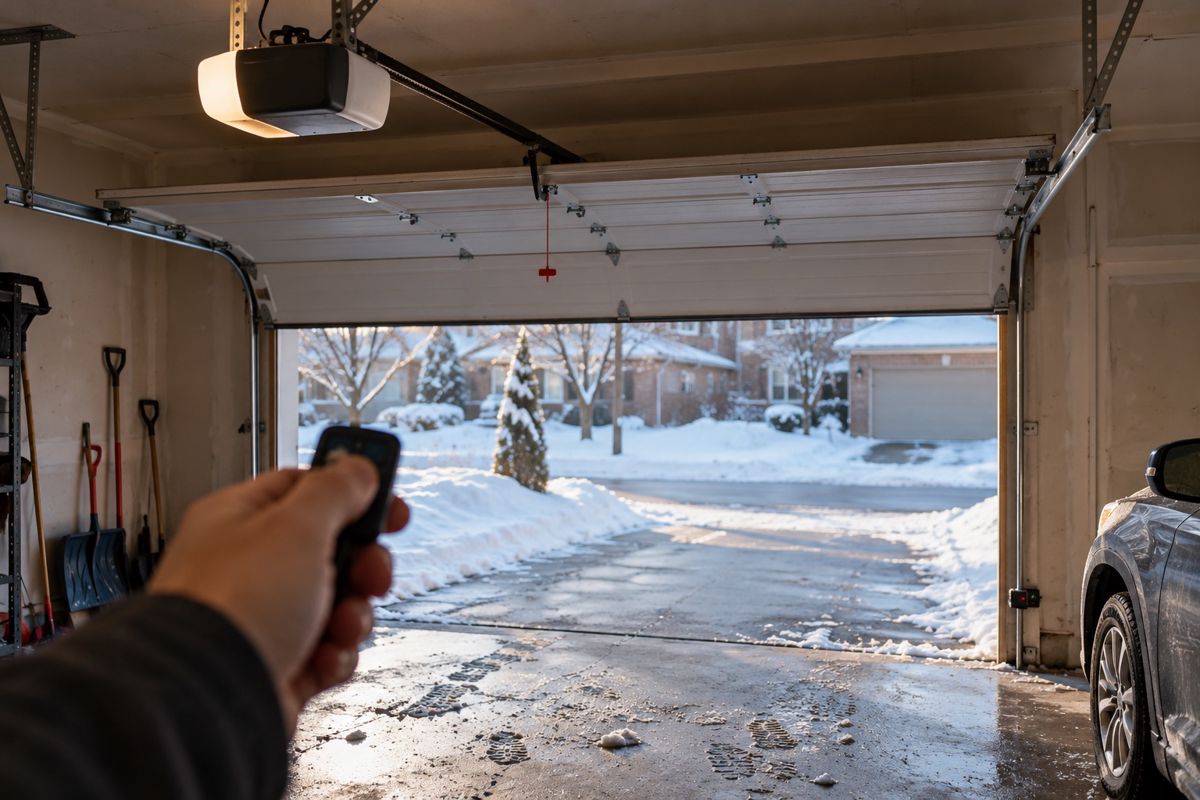
Ceiling garage door opener with a hand holding a remote

Openers in Toronto, ON

Garage door opener repair in Toronto

Remotes that go dead, doors that reverse or a motor that hums and does nothing. Here is how opener problems get sorted out.

  • Chain, belt and jackshaft openers
  • Remotes, keypads and safety sensors
  • Smart and battery backup options

Step 1 of 3

What do you need?

What does garage door opener repair cover?

An opener has several parts that fail on their own: the motor and control board, the drive that moves the door (chain, belt or screw), the travel and force settings, the safety sensors, and the remotes and wall button. Good diagnosis starts with finding out which part is at fault.

It also starts by asking whether the opener is the problem at all. Many calls about openers turn out to be spring, cable or track problems. A door that feels very heavy, will not stay halfway up or hangs crooked is a sign to look at the door hardware first. See our page on garage door spring repair if the door seems heavy.

Once the real cause is clear, the repair can range from reprogramming a remote and realigning a sensor to replacing a worn gear or the whole unit.

Why does my opener act up in winter?

Cold is hard on openers. Lubricant thickens, the door and tracks stiffen, and the motor has to push harder. Remote batteries lose strength quickly in low temperatures. Melting snow can leave ice under the bottom seal, so the door freezes to the floor and the opener strains or reverses.

Try these simple checks first:

  • Replace the batteries in the remote and keypad.
  • Check that the opener is plugged in and that any outlet reset button has not tripped.
  • Look at the two safety sensors near the floor. Their lights should be steady. Wipe off snow, ice or dirt and make sure nothing blocks the beam.
  • Look for ice or packed slush at the bottom of the door and along the floor.

If the door still reverses, stops or hums, book a visit. Do not keep forcing it.

Chain, belt or jackshaft: which opener suits my garage?

Chain drive

Strong and simple, but louder. It suits many detached garages where noise is not a concern.

Belt drive

Much quieter. A good choice for an attached garage with a bedroom or living room above or beside it.

Jackshaft (wall-mount)

Mounts at the side of the door instead of the ceiling. It frees the space above, so it suits garages with low headroom, storage racks or a tight laneway layout.

Smart features and backup

Wi-Fi openers let you check the door from your phone and share access with family. A battery backup lets the opener work during a power cut, which is useful during winter storms. Smart features need a good Wi-Fi signal in the garage, and the door must be balanced and in good shape for any opener to last.

The price depends on the repair or the unit. A sensor adjustment is a different job from a new motor, and a heavy insulated door needs a stronger opener than a light one. Other factors include the drive type, extra features such as Wi-Fi or backup power, the condition of the wiring and outlet, and how the unit is supported from the ceiling.

Simple fixes such as reprogramming remotes or realigning sensors are often quick. A full replacement usually takes a few hours, longer if new wiring or a new support is needed. Ask for a written quote that lists the parts. If you are planning a new garage door, tell us, because the opener should be matched to the new weight.

When should I replace the opener instead of repairing it?

Replacement is worth discussing when:

  • Parts are hard to find for an old model.
  • The same fault keeps coming back.
  • Gears grind, the motor is weak or the unit is very noisy.
  • The opener has no photo-eye safety sensors, which most modern units include.
  • You want smart access or battery backup that your unit cannot do.

Call about repair when the door reverses for no reason, will not close, or the motor runs but the door does not move. Our home page lists the other garage door services we cover if the fault turns out to be in the door itself.

  • Written quotes
  • Local technicians
  • Fast response
  • Parts that fit your door

Questions about garage doors in Toronto

Why does my opener hum but the door does not move?

A humming motor with no movement can mean a broken spring, a stripped gear, a jammed door or a lock engaged on the door. Do not keep pressing the button, because a strained motor can burn out. If the door feels heavy by hand, the cause is more likely a spring than the opener. A technician can tell which part has failed.

Why does my door reverse before it closes?

The usual causes are a dirty or misaligned safety sensor, a travel limit set too far, or ice and debris at the bottom of the door. Clear the sensors and floor first. If the problem remains, book a visit. Never disable the safety reverse, since it protects people, pets and cars.

Can I add a smart opener to my existing door?

Often yes. Many Wi-Fi openers fit existing doors, and some add-on controllers work with older units that have compatible safety sensors. The door must be balanced, and the garage needs a Wi-Fi signal. A technician can check whether your current opener is worth keeping or whether a new smart unit would be a better fit.

Is a battery backup worth having?

It depends on how you use the garage. If it is your main entrance to the house, a backup lets you get in and out during a winter power cut. If you rarely use it, the manual release may be enough. Backup batteries need replacing over time, so ask how long yours should last.

How long does a garage door opener last?

Many openers last around a decade or more, depending on use and maintenance. A well-balanced door, regular lubrication and clean sensors extend the life. A door that is heavy or out of balance makes the motor work harder and shortens it. Parts availability also matters, so an older model can become hard to repair even if it still runs.

Do remotes stop working in the cold?

Batteries lose power quickly in low temperatures, so a remote that works in autumn may fail on a freezing morning. Keep a spare battery in the house, not in the car. If a fresh battery does not help, the remote may need to be programmed again, or the opener's receiver may have a fault.

Step 1 of 3

What do you need?

Ready when you are

Call now or request a quote online.

(416) 555-0176

How it works

1

Call or request a quote

Tell us what the door is doing.

2

Clear price

We diagnose and quote before any work.

3

Fixed or fitted

Repaired or replaced and tested for safety.

Get my free garage door quote